What products can you find in a hotel bathroom in Japan, and how does this differ from what European establishments offer? The answer varies depending on the accommodation’s range, but a common base of amenities and toiletries distinguishes Japanese hospitality, from capsule hotels to high-end ryokans.
Separate toilets and unit baths: two configurations in Japanese hotels
The first striking feature upon opening the door to a hotel room in Japan is the layout. In older business hotels, the so-called “unit bath” configuration combines a bathtub, shower, and toilet in a single molded plastic block, compact yet functional.
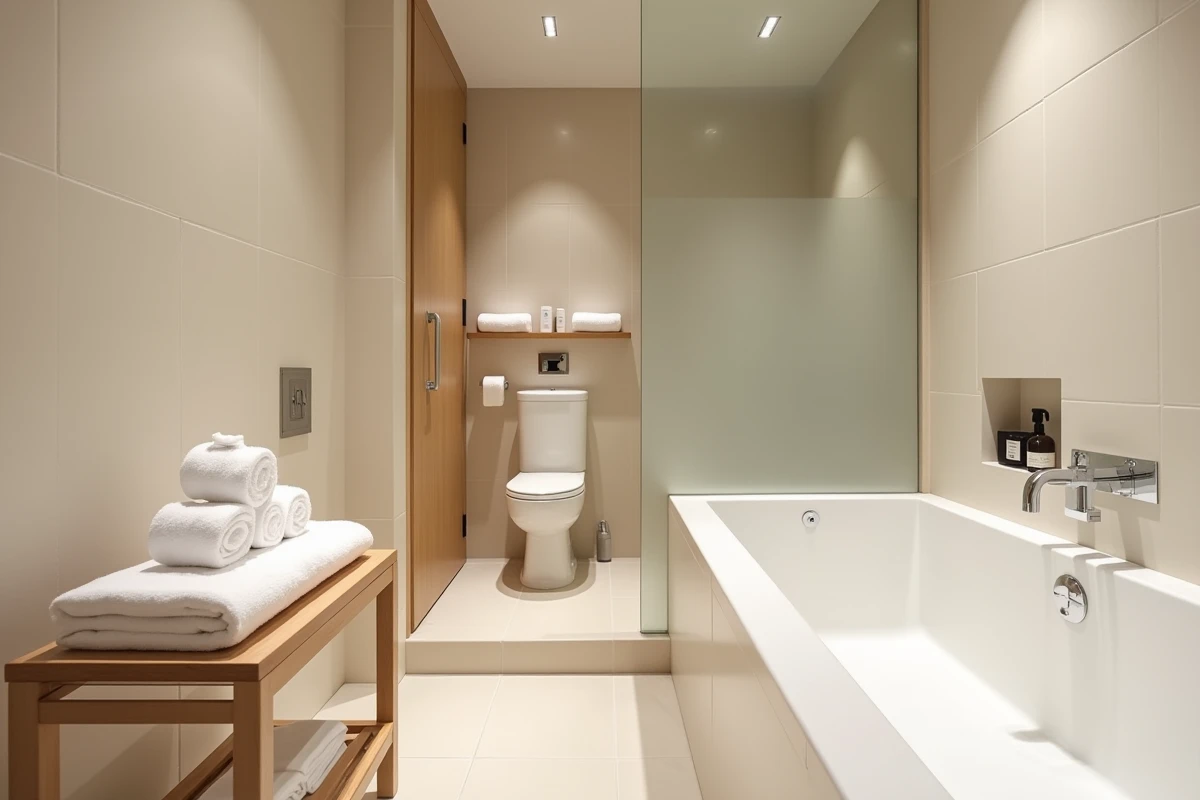
In contrast, contemporary mid-range and upscale hotels, particularly newer chains located near train stations, now offer rooms where the toilet is physically separated from the bathing and shower area. Two distinct rooms replace the monolithic block. This separation reflects the Japanese domestic norm, where the senmenjo (wash area) serves as a changing room before accessing the wet area.
Understanding what Japanese bathrooms contain helps lighten your suitcase, as most everyday products are already provided on-site.
| Element | Unit bath (classic business hotel) | Contemporary hotel / ryokan |
|---|---|---|
| Toilet and bath | Same room, plastic block | Separate rooms |
| Bathtub | Short and deep, integrated | Deep bathtub, sometimes made of wood or stone |
| Washlet toilet | Present in most cases | Present, often with wall-mounted control panel |
| Wall-mounted dispensers | Shampoo, conditioner, shower gel | Same, sometimes high-end range |
| Hairdryer | In the room or wash area | Dedicated wash area |
Toiletries provided in hotels in Japan: from capsule hotels to ryokans
The contents of Japanese bathrooms are surprisingly consistent from one accommodation to another. Even in recent capsule hotels and renovated hostels, shampoo, conditioner, and shower gel in wall-mounted dispensers are almost standard. Self-service hairdryers can be found in the communal wash area.
This standardization reduces the need to bring your own toiletry kit. For travelers used to European hotels where soap and a bottle of shampoo sometimes constitute the only provisions, the contrast is stark.
What most accommodations provide
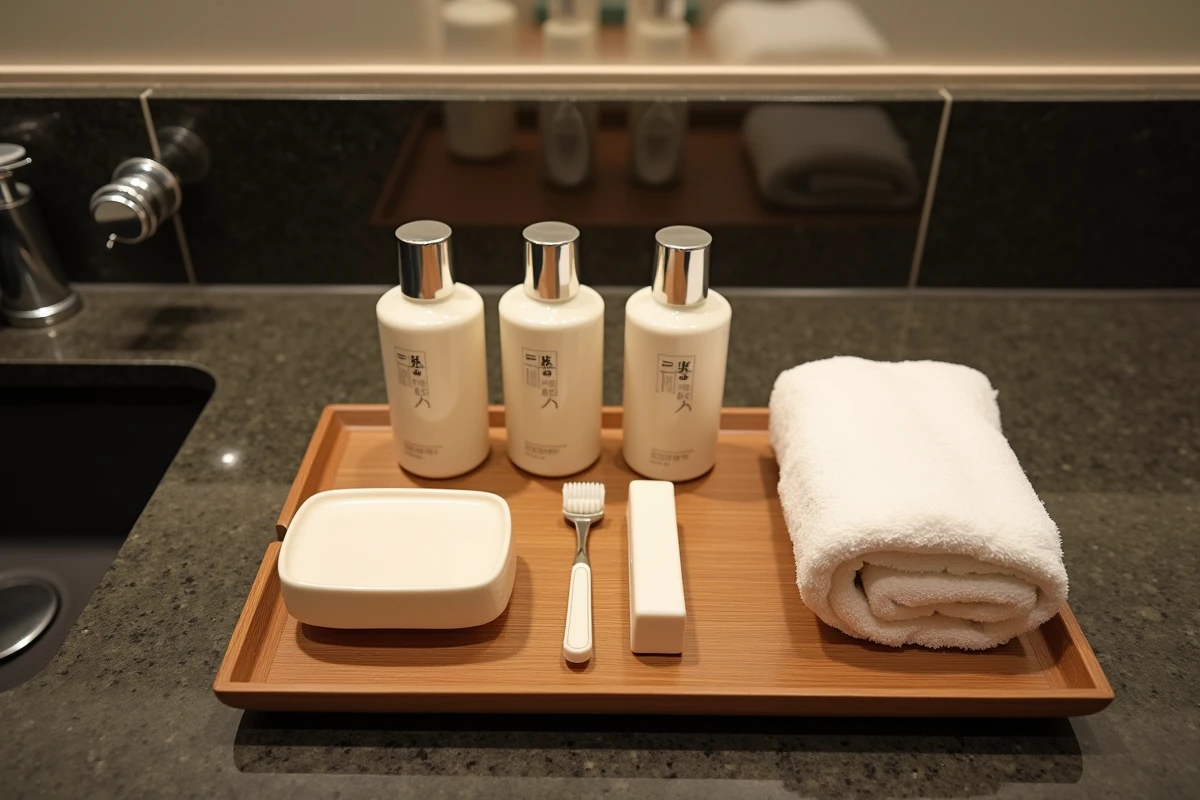
- Shampoo, conditioner, and shower gel (fixed dispensers or individual bottles depending on the range)
- Toothbrush and toothpaste in individual doses, often packaged in a pouch
- Disposable razor, comb, shower cap, and cotton swabs in mid-range and higher establishments
- Yukata (light kimono) for moving around the hotel, especially in ryokans and hotels with an onsen
In traditional ryokans, the products upscale: artisanal soaps, facial lotions, bath oils. The yukata is standard and is an integral part of the stay experience.
Japanese washlet toilets: the control panel that confuses travelers
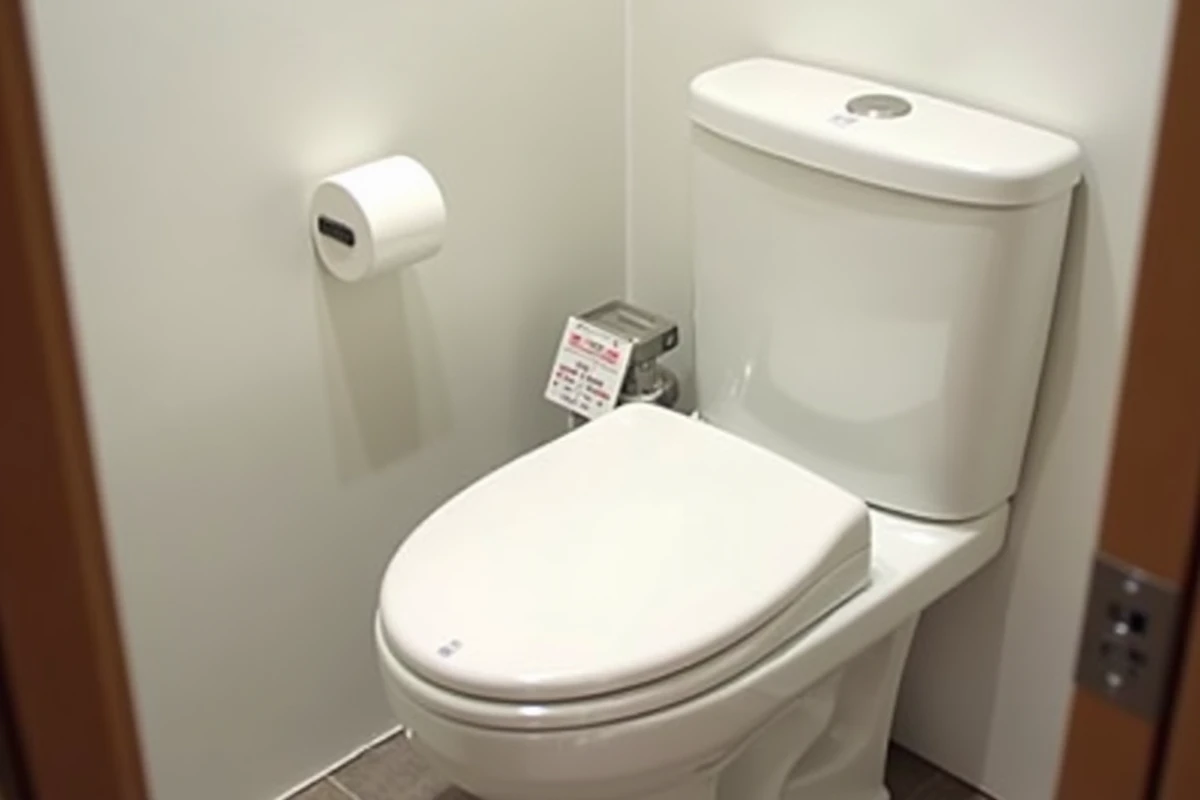
The washlet toilet is probably the piece of equipment that most marks visitors. Its presence is not limited to high-end hotels: the majority of Japanese accommodations are equipped with them, including the most modest business hotels.
The control panel, mounted on the wall or on the armrest, displays several buttons. The main functions include rear wash, front wash, water pressure and temperature adjustment, as well as warm air drying. The pictograms are sometimes accompanied by text in Japanese only in older establishments, but most hotels frequented by tourists add universal pictograms or translations in English.
One button deserves special attention: the one marked 止 (stop). Activating it first avoids surprises if a spray starts inadvertently.
Private onsens in hotels: a trend that goes beyond ryokans
Long reserved for ryokans and hot spring resorts, access to a thermal bath is becoming more democratized. An increasing number of classic hotels, including in Tokyo and Osaka, now integrate small private onsen areas accessible to guests. These baths, often fed by a natural hot spring, offer an alternative for travelers reluctant to bathe nude in a communal space.
The distinction between onsen (natural hot spring) and sento (public bath heated artificially) remains relevant. In an onsen, the water comes from a geothermal source and contains specific minerals. Sento, found in most Japanese cities, use heated water and apply the same hygiene rules (washing thoroughly before entering the communal bath).
Rules to know for baths
- Wash and rinse thoroughly before entering the bathtub or communal bath, never the other way around
- Tattoos remain a reason for refusal in some onsen and sento, although tolerance is increasing in tourist establishments
- The small towel provided is used to cover oneself outside the bath but must never touch the water of the basin
In ryokans equipped with a kashikiri-buro (reservable private bath), the time slot usually lasts about forty minutes. This option is suitable for families or travelers with tattoos.
All these amenities, from the wall-mounted shampoo dispenser to the private thermal bath, form a coherent system where hygiene is considered a ritual, not just a convenience. The Japanese bathtub, short and deep, is designed for immersing oneself up to the shoulders in already clean water. This detail alone summarizes the logic of the bathroom in Japanese hospitality: the bathwater is for relaxation, not for cleaning.