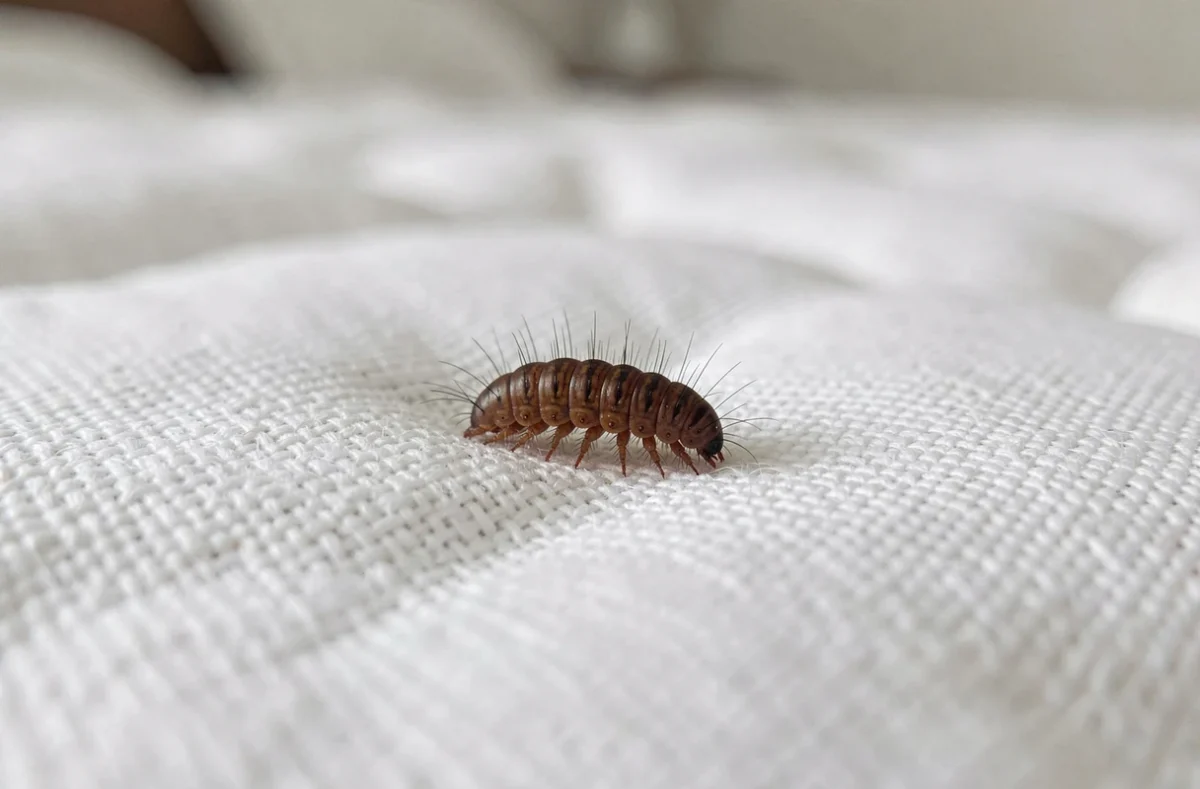
The carpet beetle larva is the juvenile form of a small beetle in the Dermestidae family. Measuring just a few millimetres, it has an elongated, segmented body covered in brown or golden hairs.
It is not the mattress itself that attracts it, but animal-derived fibres and organic debris that build up in bedding: hair, skin flakes and filling feathers. Spotting it early helps prevent damage to textiles and reduces skin reactions caused by its irritating hairs.
Carpet beetle moults and debris: clues hidden in your mattress
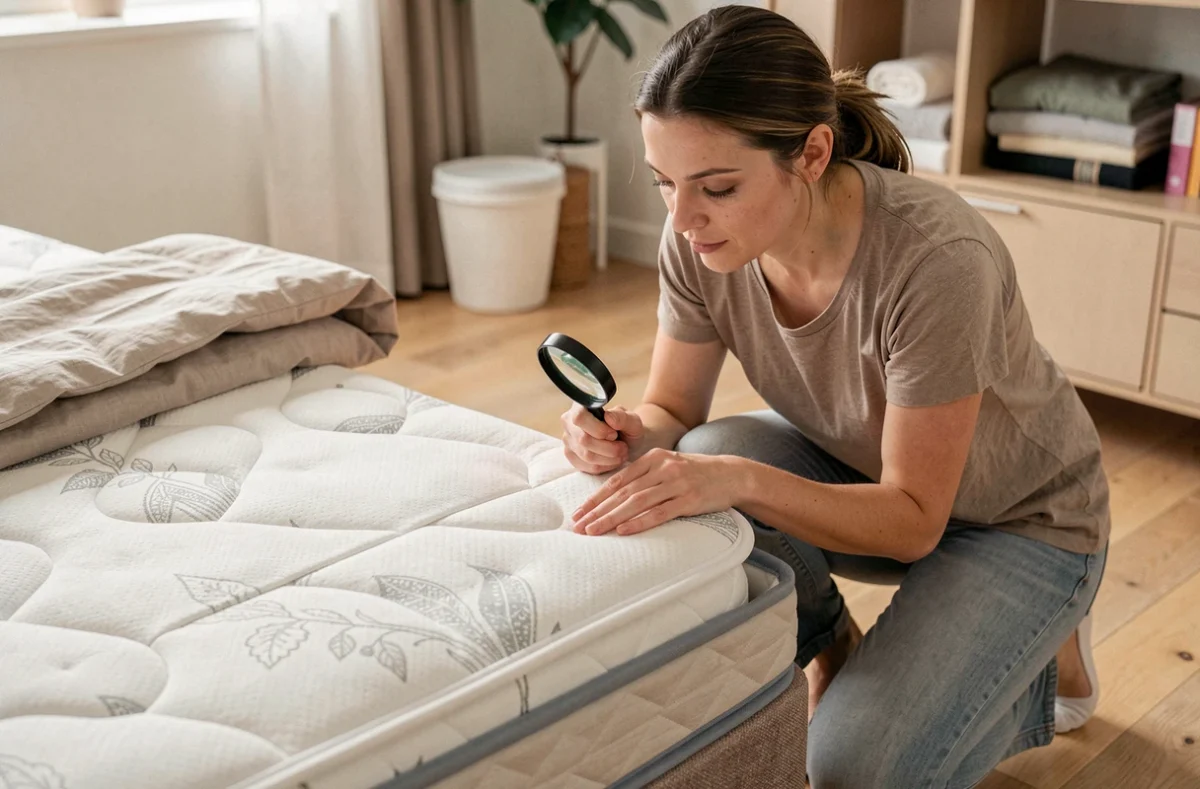
Spotting a live larva at first glance is fairly rare, as it hides in folds, seams and the underside of the mattress. Moults accumulated near the seams are the most reliable sign. These empty, brown, bristly casings remain long after the larva has moved on.
A simple way to tell old debris from ongoing activity is to vacuum a suspicious area thoroughly, then check a few days later for new moults. If any appear, there is an active infestation nearby.
Spotting carpet beetle larvae in your mattress also means looking for tiny areas of damage on fabrics in contact with the bed: wool pillowcases, blankets and upholstered box springs. Irregular micro-holes, unlike the clean holes caused by clothes moths, point to carpet beetles.
Larval source outside the bed: why inspecting the mattress is not enough
A common instinct is to focus all your attention on the bedding. Yet a larva found on a sheet may have migrated from a source elsewhere in the room, or even another part of the home.
Common sources away from the bed
Carpet beetle larvae feed on any keratin- or protein-based material: wool rugs, felt under furniture, or pet hair trapped behind a skirting board. Bird or rodent nests in attics or wall cavities are also documented sources, according to university integrated pest management programmes (UC IPM).
- Areas beneath heavy furniture that is rarely moved, where dust and hair accumulate
- Wardrobes containing wool or fur garments that have not been worn for several months
- Ventilation ducts or suspended ceilings containing dead insects, which carpet beetles also feed on
A larva on the mattress does not mean the mattress is the source. Without a wider inspection, cleaning only the bed leaves the source untouched, and the infestation can return within a few weeks.
Carpet beetle or bed bug: quick visual checks
Confusing these two insects can lead to unsuitable treatments. Methods that work against one are often ineffective against the other. Two physical features can help you tell them apart without any special equipment.
Check for hairs
The carpet beetle larva is covered in hairs visible to the naked eye, sometimes with a longer tuft at the rear. Bed bugs, at every stage of development, have a smooth, flat, shiny body shaped like an apple seed. If the insect is hairy, it is not a bed bug.
Check for signs
Bed bugs leave small black spots (droppings made of digested blood) on mattresses and sheets. Carpet beetles leave no black spots or blood marks, but do leave moults and damaged fibres. The absence of clusters of black spots makes bed bugs an unlikely cause.
A skin reaction alone is not enough to tell them apart. The irritating hairs of carpet beetle larvae can cause red patches that are sometimes mistaken for bed bug bites, but the mechanism is different: it is contact dermatitis, not a bite. The location of the marks (areas that touched the fabric rather than lines on skin exposed during sleep) can help identify the cause.
Protecting your bedding: targeted cleaning and textile prevention
Dealing with carpet beetles involves two steps: removing the larvae and their eggs, then eliminating the conditions that encourage them to return.
Vacuuming and washing at high temperatures
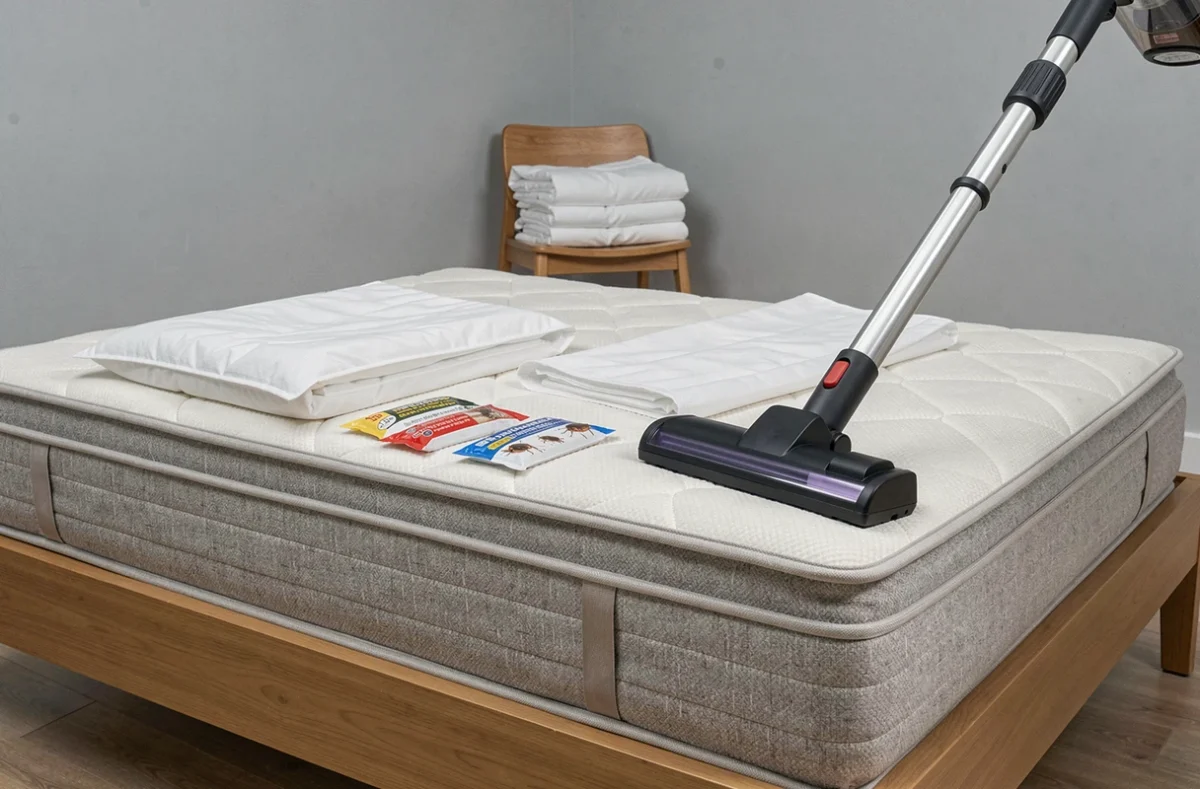
A vacuum cleaner is the first line of defence. Use the narrow attachment along every mattress seam, over the bed base and under the bed frame. Dispose of the bag or empty the canister outside immediately afterwards. Washing removable fabrics at high temperatures (above the threshold the larvae can tolerate) complements vacuuming. For items that cannot withstand a hot wash, freezing them for several days is a documented alternative.
Reduce food sources
- Vacuum regularly under furniture and behind skirting boards to remove accumulated hair and fibres
- Store wool garments in airtight containers when they are not being worn
- Check for bird nests in the attic or near windows, as they provide a food source for larvae
Diatomaceous earth, a mineral powder, is sometimes applied in hard-to-reach corners. It works by abrading the insect’s cuticle. Its effectiveness against carpet beetles depends on direct, prolonged contact with the larvae, making it better suited to undisturbed areas (under furniture or along skirting boards) than to the surface of a mattress.
Seeing an adult carpet beetle near a window in spring does not automatically mean there is a source in the bedding. Adults fly and enter through openings to lay eggs. Checking vulnerable textiles at this time of year, before the larvae have time to settle in, remains the most effective long-term preventive measure.