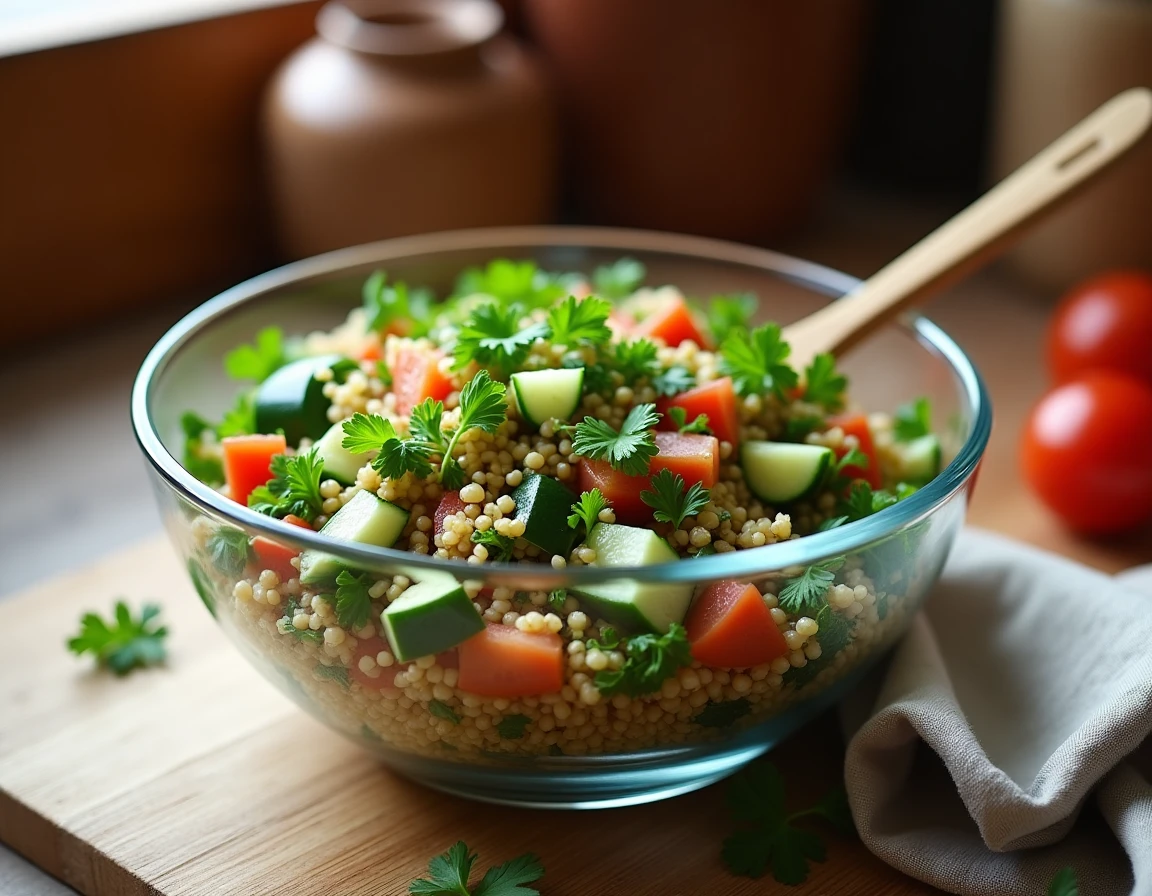
Tabbouleh relies on ingredients that are sensitive to moisture and heat: hydrated semolina or bulgur, fresh herbs, lemon juice, olive oil. This combination makes its storage and thawing more technical than a simple pasta dish. The HACCP guidelines applied in collective catering in France also impose a rapid cooling to the core in less than 2 hours after preparation before refrigeration, under penalty of reducing the recommended shelf life.
Bacillus cereus and hydrated cereals: the risk to know before freezing
Once cooked and rehydrated, semolina and bulgur provide a favorable environment for the development of Bacillus cereus, a spore-forming bacterium that survives freezing. Santé publique France reminds us that preparations containing precooked hydrated wheat and fresh herbs should not be refrozen after thawing, even if kept in the refrigerator.
This microorganism produces heat-stable toxins. In other words, reheating or allowing a thawed tabbouleh to return to room temperature does not destroy these toxins. The risk is not limited to temporary digestive discomfort: the toxicovigilance reports from 2020-2023 of the French Poison Control Centers indicate an increase in foodborne illnesses related to mixed salads made with cereals and raw vegetables, often stored for more than three days in the refrigerator.
Mastering the freezing and storage of tabbouleh starts with understanding this bacteriological risk, which conditions each step described next.
Freezing plain semolina: the only reliable method for texture
Freezing a complete tabbouleh, with tomatoes, cucumber, mint, and parsley, yields disappointing results. The raw vegetables with high water content (tomato, cucumber) disintegrate during thawing. The herbs turn black and lose their fragrance.
Plain semolina or bulgur should be frozen separately, without the dressing or raw vegetables. Feedback from central kitchens (school and corporate catering), relayed by the Restau’Co Network, confirms that only the separated cereal base retains an acceptable texture after thawing.
Preparation steps before freezing
- Prepare the semolina or bulgur, then let it cool while respecting the rule of two hours maximum between the end of cooking and refrigeration
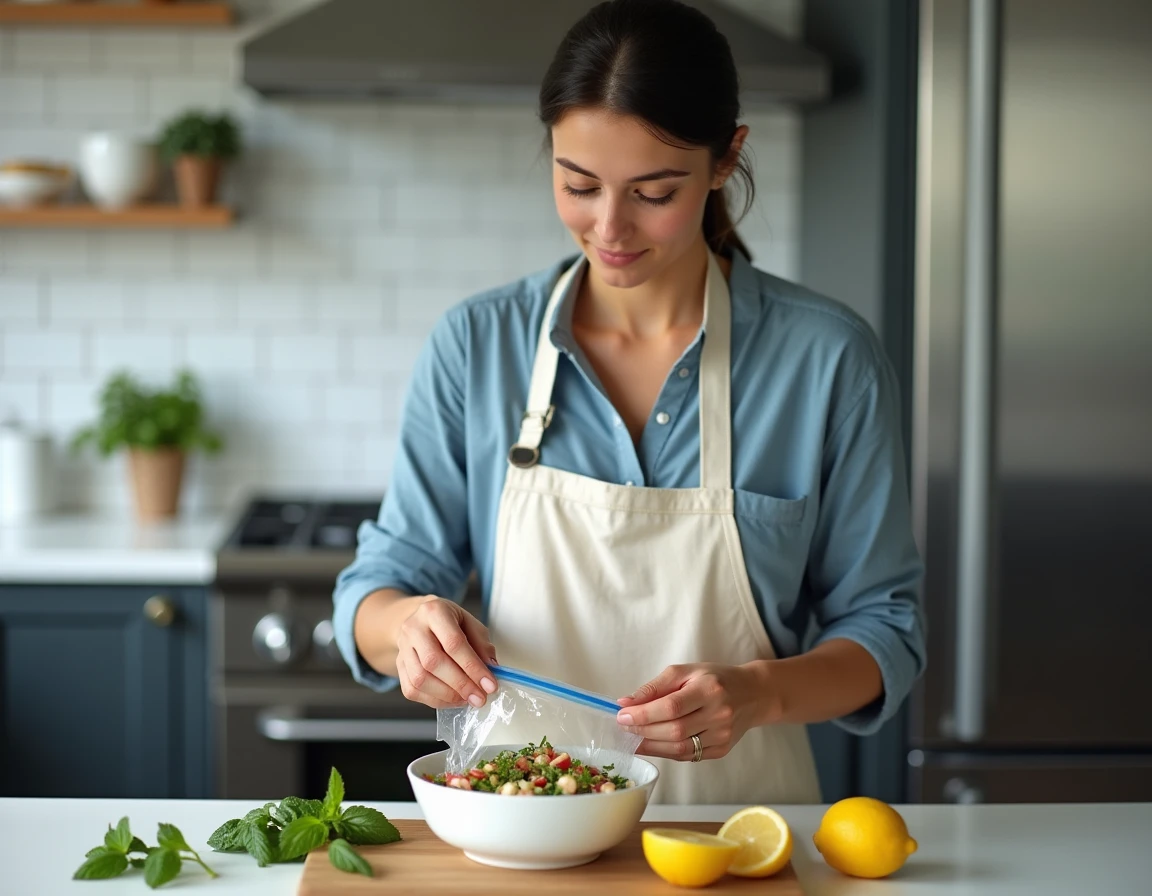
- Divide into individual portions in airtight containers or freezer bags, removing as much air as possible to limit crystallization
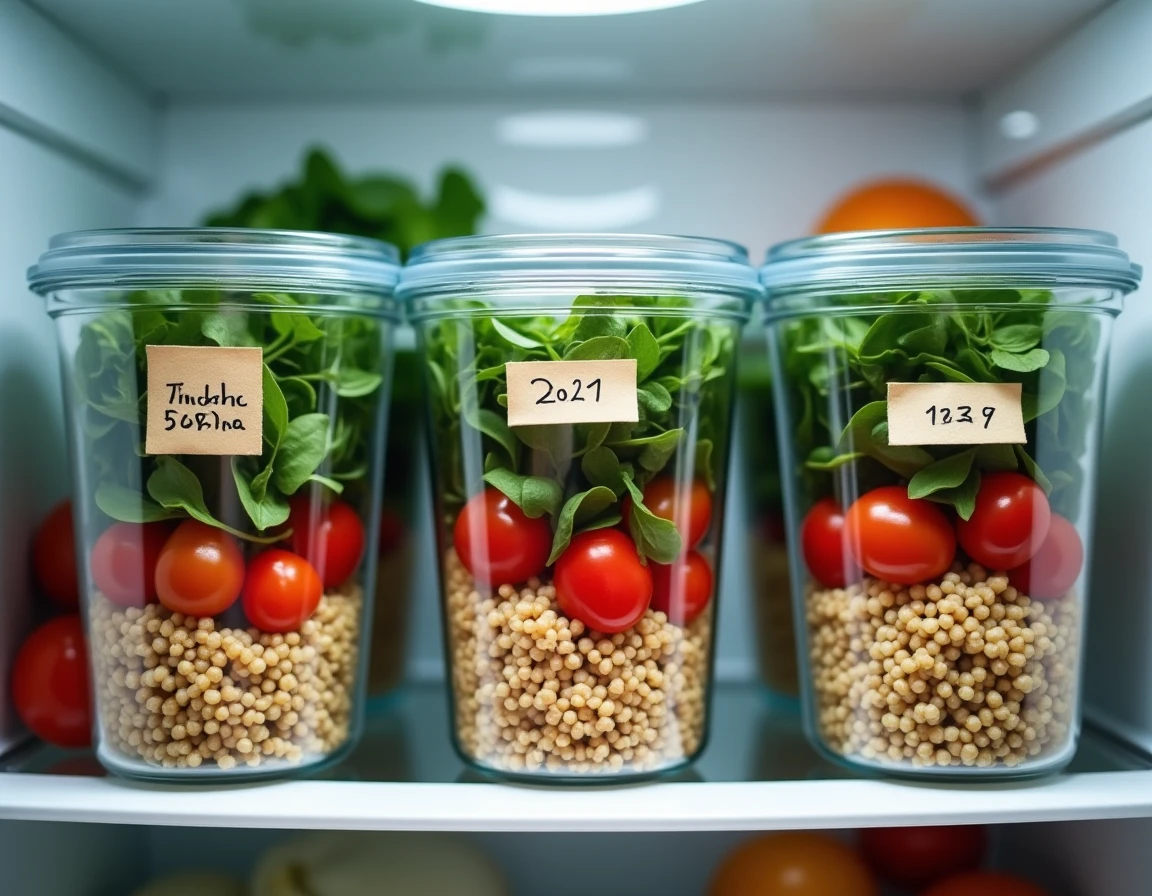
- Label each portion with the preparation date, as the storage duration in the freezer should not exceed a few weeks for optimal results
Fresh herbs, lemon juice, olive oil, tomatoes, and cucumber will be added only at the time of serving, after the cereal base has completely thawed.
Thawing tabbouleh without losing freshness: refrigerator method
Thawing in the refrigerator remains the only method that respects the cold chain. Taking the portion out of the freezer and placing it in the refrigerator the night before allows for a slow and even thawing, without passing through the critical temperature zone (between 4 °C and 63 °C) where bacteria multiply rapidly.
Thawing at room temperature or in the microwave creates temperature discrepancies in the semolina. Some areas quickly exceed the safety limit while others remain frozen. For a dish that is eaten cold and will not be recooked, this thermal imbalance increases health risks with no possible recourse.
After thawing: assembly and seasoning
Once the semolina is thawed, fluff it with a fork to break any clumps. Add the lemon juice and olive oil first: the acidity of the lemon slows bacterial proliferation and revitalizes the grain. Then incorporate the chopped fresh herbs, diced tomato, and cucumber.
The assembled tabbouleh after thawing should be consumed within hours. Returning it to the refrigerator for the next day extends a cold chain that has already been compromised, which is not recommended.
Storage of fresh tabbouleh in the refrigerator: concrete limits
A freshly prepared tabbouleh (not frozen) can be stored in the refrigerator in an airtight container. Data from poison control centers indicate that exceeding three days of storage in the refrigerator increases the risk of foodborne illness, a threshold regularly reported by patients in toxicovigilance reports.
Two factors accelerate degradation:
- The presence of raw vegetables rich in water (tomato, cucumber) releases juice that soaks the semolina and promotes microbial growth
- Repeated opening of the container disrupts temperature maintenance and introduces new contaminants
- Insufficient seasoning with lemon reduces the protective acidity of the mixture
Preparing individual portions rather than a large bowl avoids multiple openings. Portions not consumed within two days should be discarded rather than refrozen.
Homemade or industrial tabbouleh: a difference for freezing
Commercial tabbouleh often contains preservatives, emulsifiers, and a sauce already integrated. Their freezing is more unpredictable, as the formulation has been optimized for refrigerator storage, not for a freeze-thaw cycle. The texture and taste after thawing are more affected.
Only homemade tabbouleh offers the possibility of separating the cereal base from the garnish and the sauce. This separation is the condition for successful freezing. For tabbouleh purchased in a tray, the best option remains to consume it within the time indicated on the packaging and not attempt freezing.
Lebanese tabbouleh, which contains a higher proportion of herbs (parsley, mint) compared to the grain, freezes better according to some feedback, probably because the bulgur is present in lesser quantity and the herbs, even when blackened, blend into the overall mix. The base remains the same: separate what can withstand freezing from what cannot, and never refreeze a preparation that has already been thawed.