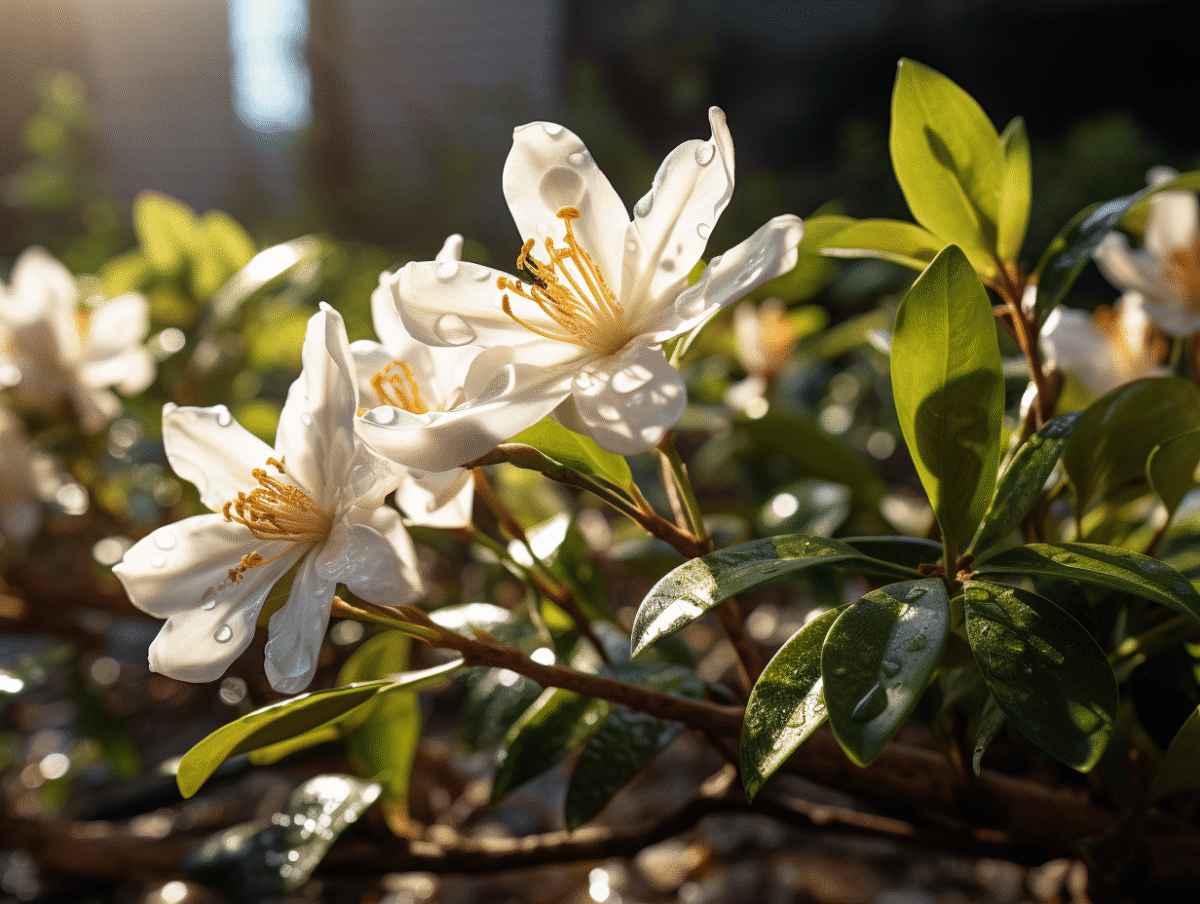
In the garden, jasmine is often appreciated for its abundant flowering and intoxicating fragrance. Gardeners may sometimes face a concerning issue: the premature dropping of jasmine flowers. This phenomenon, far from being trivial, can be a sign of environmental imbalances or inadequate care. For the gardening enthusiast, it is essential to understand the factors contributing to this drop in order to take the appropriate corrective measures and thus ensure the plant’s splendor.
The main causes of jasmine flower drop
The dropping of jasmine flowers can result from several factors closely related to growing conditions. Among the common causes, lack of pruning is often mentioned. Regular pruning is fundamental to stimulate jasmine flowering. Without this intervention, the plant may become cluttered with superfluous branches that deplete its energy reserves and hinder flower development.
Watering is another key element in jasmine maintenance. Excessive watering, just like insufficient water supply, can cause flower drop. Jasmine requires a moderate amount of water, with particular attention during growth and flowering periods. A potting mix that is consistently moist but not waterlogged is ideal for this plant.
The potting mix in which jasmine is planted also influences the health of the plant. A poor potting mix will not provide the necessary nutrients for vigorous foliage growth and flowering. It is therefore advisable to use a nutrient-rich potting mix suited to the specific needs of jasmine for optimal plant and flower development.
The presence of insects such as mealybugs can severely affect the plant. These pests attack jasmine by feeding on its sap and secreting honeydew, which promotes the appearance of sooty mold, a sticky substance harmful to the plant’s proper development. In the context of care for Tuscan jasmine, for example, heightened vigilance regarding these pests is imperative to preserve the highly valued flowering of this species.
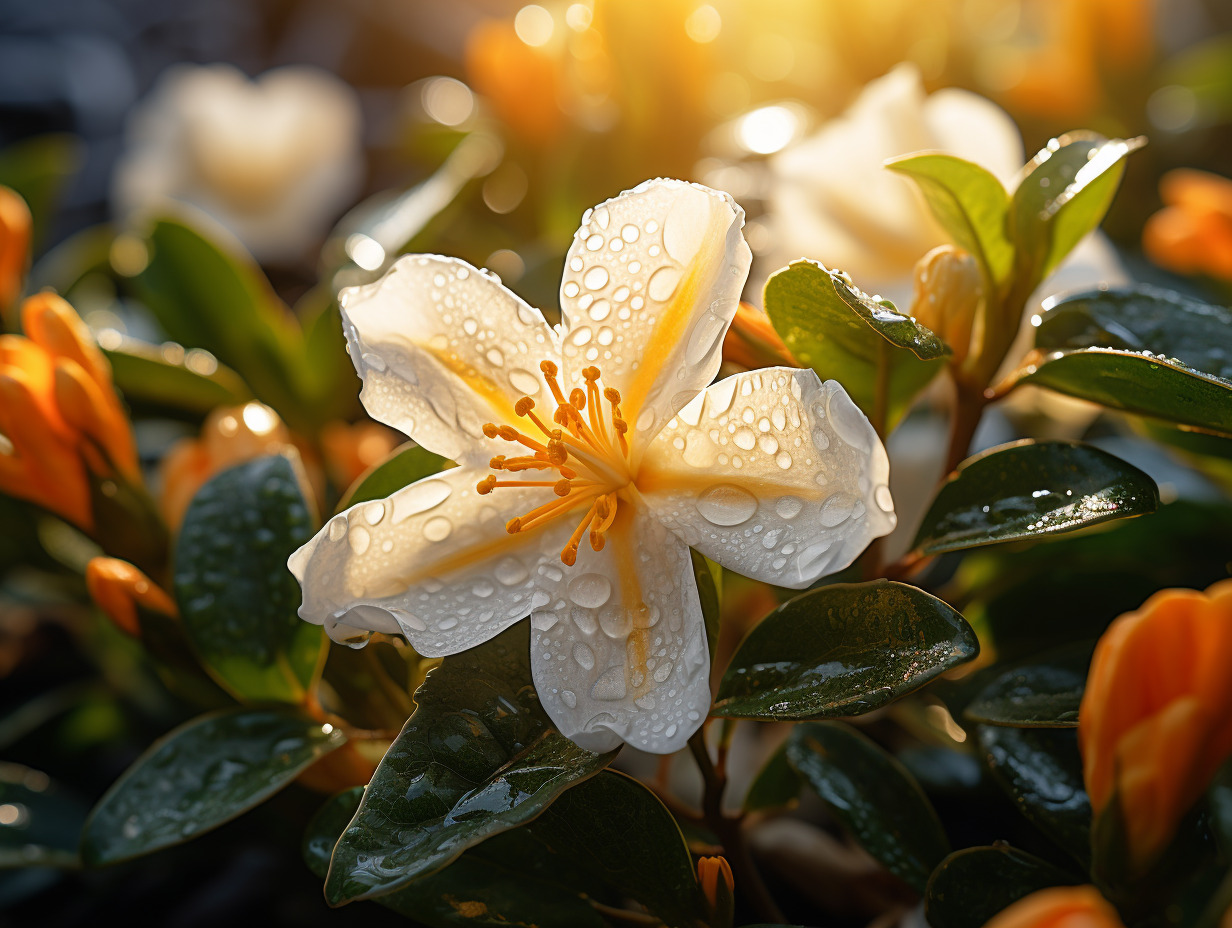
Solutions and prevention for a healthy jasmine
Proper pruning remains an effective preventive measure to maintain jasmine vigor. Cut back superfluous branches and those that appear weakened to stimulate plant growth and thus promote flowering. This practice should be carried out judiciously, avoiding periods of extreme cold or excessive heat. Pruning tools should be disinfected to prevent the transmission of diseases.
Particular attention should be paid to watering. Use non-limestone water to maintain the necessary moisture without exposing the plant to excess water. During periods of active growth and flowering, water supply should be regular but moderate, always checking that the soil is slightly moist to the touch before watering again.
Choosing a nutrient-rich potting mix is essential to provide a conducive environment for jasmine health. This growing medium should be well-draining and contain the necessary nutrients for optimal plant development. Regular application of fertilizer specific to flowering plants can complement this approach by providing the additional elements required for abundant flowering.
Controlling insects such as mealybugs requires prompt and effective intervention. The use of natural insecticide, such as a solution made from black soap and vegetable oil, can help eliminate these pests without harming the environment. Ensure that the plant is in a well-ventilated environment to avoid the onset of diseases such as soft rot or leaf browning.