When cooking or embarking on projects that require precise measurements of liquids, accuracy is fundamental. Measurement systems vary significantly from country to country, which can sometimes be confusing. An American, for example, might be bewildered by a European recipe expressed in liters and milliliters, while a European might be puzzled by American pints and fluid ounces. Fortunately, there are simple tips and techniques that allow for quick and accurate conversions of these measurements, thus avoiding potentially disastrous errors in your dish compositions or mixtures.
Understanding Liquid Measurement Units
Before we venture into converting measurements, it’s important to grasp the basic units of measurement that govern liquid volume in cooking. The liter (l), centiliter (cl), and milliliter (ml) are the pillars of liquid measurement, with each unit being convertible to the others. Understand that 1 liter is equivalent to 100 centiliters and, in the same logic, to 1000 milliliters. This relationship is fundamental for accurately following recipes.
Now let’s discuss the conversions between these units. To convert milliliters to centiliters, the rule is simple: divide the number of milliliters by 10. If a recipe calls for ‘400 ml in liters’, first convert to centiliters by dividing by 10, which gives 40 cl, then convert to liters by dividing this time by 100, resulting in 0.4 liters. The accuracy of these conversions is necessary for the success of your preparations.
Cooking, a field where precision reigns, requires a clear understanding of these measurements to ensure adherence to recipes. A measurement error can have direct consequences on the texture and taste of your dishes. To avoid this, familiarize yourself with the equivalents: remember that 150 milliliters corresponds to 15 centiliters, and always pay attention to these details when preparing your meals.
The conversion of weights and measures is therefore essential for following recipes in the kitchen with flawless accuracy. Measurement units are convertible to one another, and this flexibility allows for any recipe to be adapted to the metric system in use. Whether you are measuring ingredients for a sauce or calculating proportions for a cake, the ability to juggle these measurement units is your greatest asset. Take the time to learn and apply them, and the results will follow.
Techniques and Tips for Error-Free Conversions
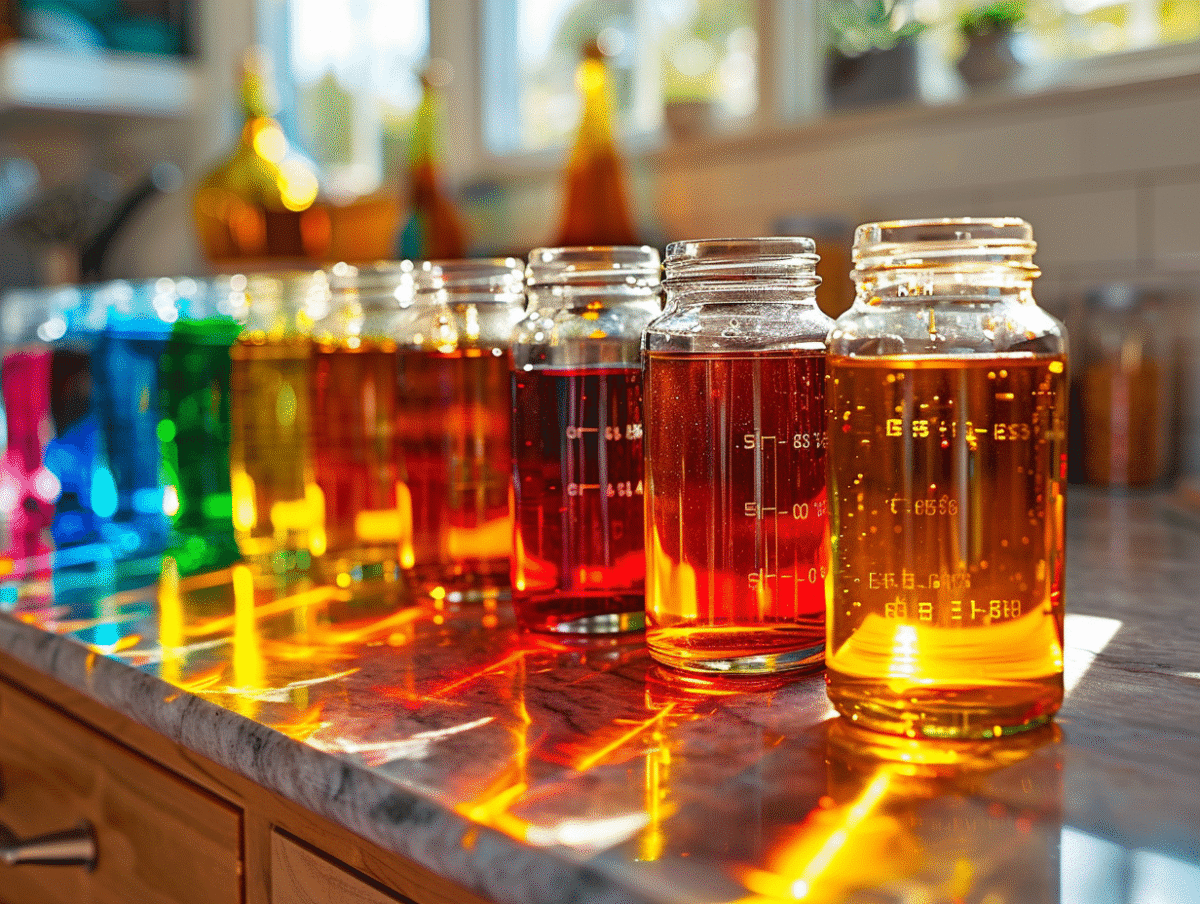
Measuring tools such as measuring cups, scales, teaspoons and tablespoons, yogurt pots, or water bottles are indispensable allies for precise liquid measurement. The measuring cup, with its markings for different units, provides a clear visualization of volumes, thus facilitating liquid measurement conversions without risk of error. The scale, often underestimated for liquids, allows for remarkably accurate measurements when recipes are expressed in grams or ounces.
In the culinary field, the trick often lies in using familiar references. A teaspoon is approximately equivalent to 5 ml, while a tablespoon corresponds to 15 ml. These simple equivalents turn the art of conversion into child’s play. For recipes requiring larger volumes, the yogurt pot can serve as a reference measure, knowing that it typically contains 125 ml of liquid. Once mastered, these references allow you to convert milliliters and centiliters with an ease that pays homage to the greatest chefs.
For bakers in pursuit of perfection, like in the example of Cyril Lignac’s Molly cake, accuracy is paramount. In such cases, the scale becomes the instrument of choice, allowing for precision to the gram, essential for the success of such recipes. Adapt your method to the requirements of the preparation: a delicate dessert will require a scale, while a simple vinaigrette can be made with a tablespoon. Combine flexibility and precision, and the conversion of liquid measurements will become second nature to you.