The autumn-winter 2026 shopping trends are not just a parade of seasonal colors. Two underlying movements are reshaping how we build a wardrobe: on one side, a French regulation that concretely changes the information available at the time of purchase; on the other, a stylistic shift towards pieces designed for both use and appearance. These two axes deserve to be examined before heading to the store.
Ultra-express fashion law: what changes when buying clothes
The ultra-express fashion law imposes new obligations on brands selling online in France. The origin of manufacturing becomes mandatory information when purchasing online. Websites must also display messages related to sobriety, reuse, repair, and recycling.
In practice, a buyer browsing shopping on Fimina Mag or any other online catalog will systematically see these mentions. The stated goal is to make the environmental cost of a garment visible before the cart is validated.
At the same time, the European regulation ESPR, recalled by ADEME in October 2026, aims to establish a minimum level of ecological performance for products entering the European market. Field returns vary on the actual effect of these measures on purchasing behaviors, but they are already changing the presentation of product sheets and brand communication.

Utility wardrobe: the autumn-winter 2026 fashion trend focused on use
The fashion shows and selections of the season highlight a style described as “utility.” Pieces with multiple pockets, technical materials, and layering dominate the proposals, especially in men’s fashion. The associated shades are khaki, beige, and slate blue.
This style is not limited to a reimagined military look. It reflects an approach to clothing where functionality takes precedence, without sacrificing a structured silhouette.
How to adopt the utility style without falling into uniformity
The key lies in mixing styles. A cargo jacket worn with dressier pants, or a technical sweater under a classic coat, is enough to create contrast. The idea is to integrate one or two functional pieces into a look that remains personal, rather than adopting the style from head to toe.
- Favor a single “technical” piece per outfit to avoid a total military look
- Play with textures rather than colors: a matte fabric against a shiny fabric creates depth without multiplying shades
- Layering works better with different weight layers, for example, a thin vest under a thicker parka
Autumn 2026 color palette: two coexisting orientations
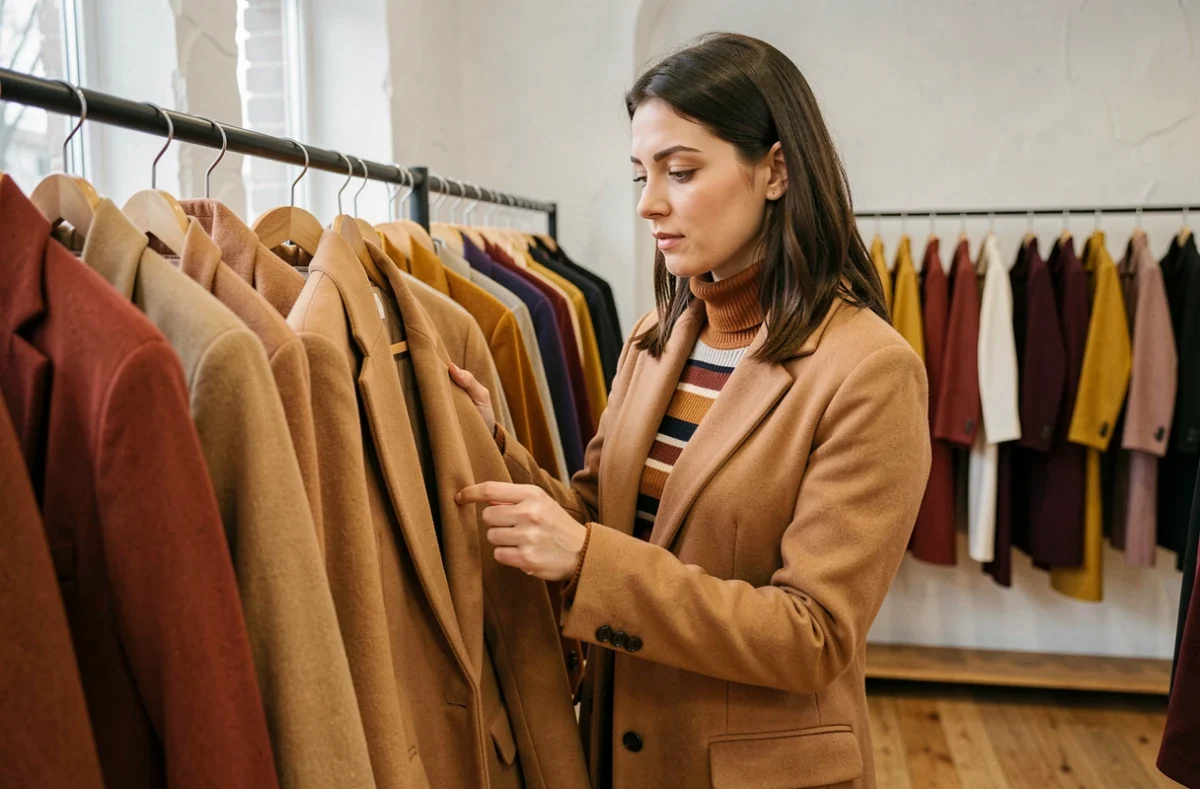
Seasonal forecasts do not converge towards a single color. Two families of shades share the collections: on one side, neutrals like gray, cream, and taupe; on the other, bold colors like Tiffany blue, red, butter yellow, eggplant, or pale pink.
This coexistence is a notable fact. It indicates that brands are no longer betting on a single standout color for the season but are offering hybrid wardrobes. An autumn wardrobe can combine a neutral base with one or two pops of bright color without appearing discordant.
Creating an autumn look with opposing colors
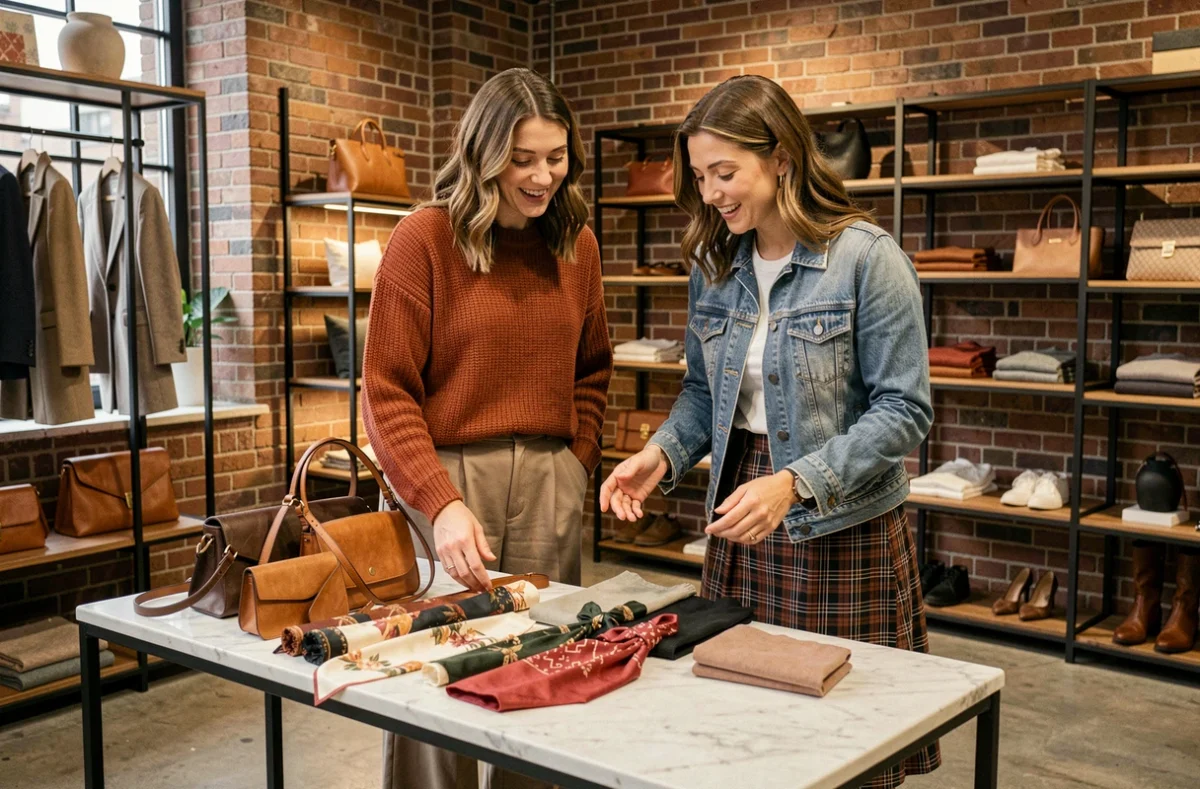
The trap would be to treat these two palettes separately. The most successful looks spotted this season combine a neutral volume (cream coat, taupe pants) with a saturated piece (red sweater, eggplant scarf). The color accent works best on a piece close to the face, which explains the success of brightly colored sweaters this season.
Conversely, wearing three bold colors simultaneously requires a mastery of proportions that most guides do not detail. A simple rule: if the colored piece represents less than one-third of the visible area, the overall look remains coherent.
Environmental labeling and seasonal choices: where do we really stand
The environmental labeling of clothing is no longer a topic reserved for institutional reports. It is starting to influence how collections are presented in stores and online. ADEME mentions in October 2026 the ongoing work on the ESPR regulation, without a definitive implementation schedule yet confirmed for all textile categories.
For a buyer, the practical consequence is gradual. Product sheets are enriched with information about composition, origin, and sometimes estimated ecological impact. The label becomes a comparison tool between two similar pieces, not just an indicator of size or material.
- Check for the presence of the origin of manufacture on online purchases, made mandatory by the ultra-express fashion law
- Compare technical materials (recycled polyester, organic cotton) by looking at the complete composition, not just the marketing term
- Keep in mind that labels and certifications vary from country to country: a product sold in France must comply with the French framework, but a purchase on a foreign site does not offer the same guarantees
The autumn-winter 2026 season is distinguished less by a stylistic break than by a change in purchasing conditions. Between a stricter regulatory framework, a palette that refuses monochrome, and a wardrobe that embraces its functional dimension, the choices to be made in-store are more informed than before. The style of the season is built as much in front of the label as in front of the mirror.