In the field of horticulture and landscaping, maintaining a green and lush lawn is often synonymous with good health and a well-kept aesthetic. However, yellowing grass can be caused by a multitude of factors, ranging from unfavorable weather conditions to inadequate gardening practices. Amateur and professional gardeners are constantly seeking practical solutions to counter this unpleasant phenomenon. Identifying the underlying causes and applying proven methods can not only revitalize the lawn but also prevent future problems, ensuring vibrant greenery throughout the year.
Understanding the Causes of Lawn Yellowing
When the first signs of lawn yellowing appear, it is essential to question the triggering elements. The heatwave and drought, for example, subject the lawn to considerable water stress, altering its color and vigor. Similarly, a lawn becomes more vulnerable when exposed to high temperatures without sufficient water supply.
Additionally, the lawn can be yellowed by pet urine, a well-known scourge for dog owners. The characteristic yellow spots appear where the urine has been deposited, burning the grass due to its high nitrogen concentration. This phenomenon, although localized, can be unsightly and detrimental to the overall health of the lawn.
Diseases and pests should not be overlooked in the quest for the causes of yellowing. Some fungal conditions, for example, manifest as yellowish spots that spread rapidly if not treated adequately. A precise diagnosis is necessary to identify the disease and apply the appropriate treatment.
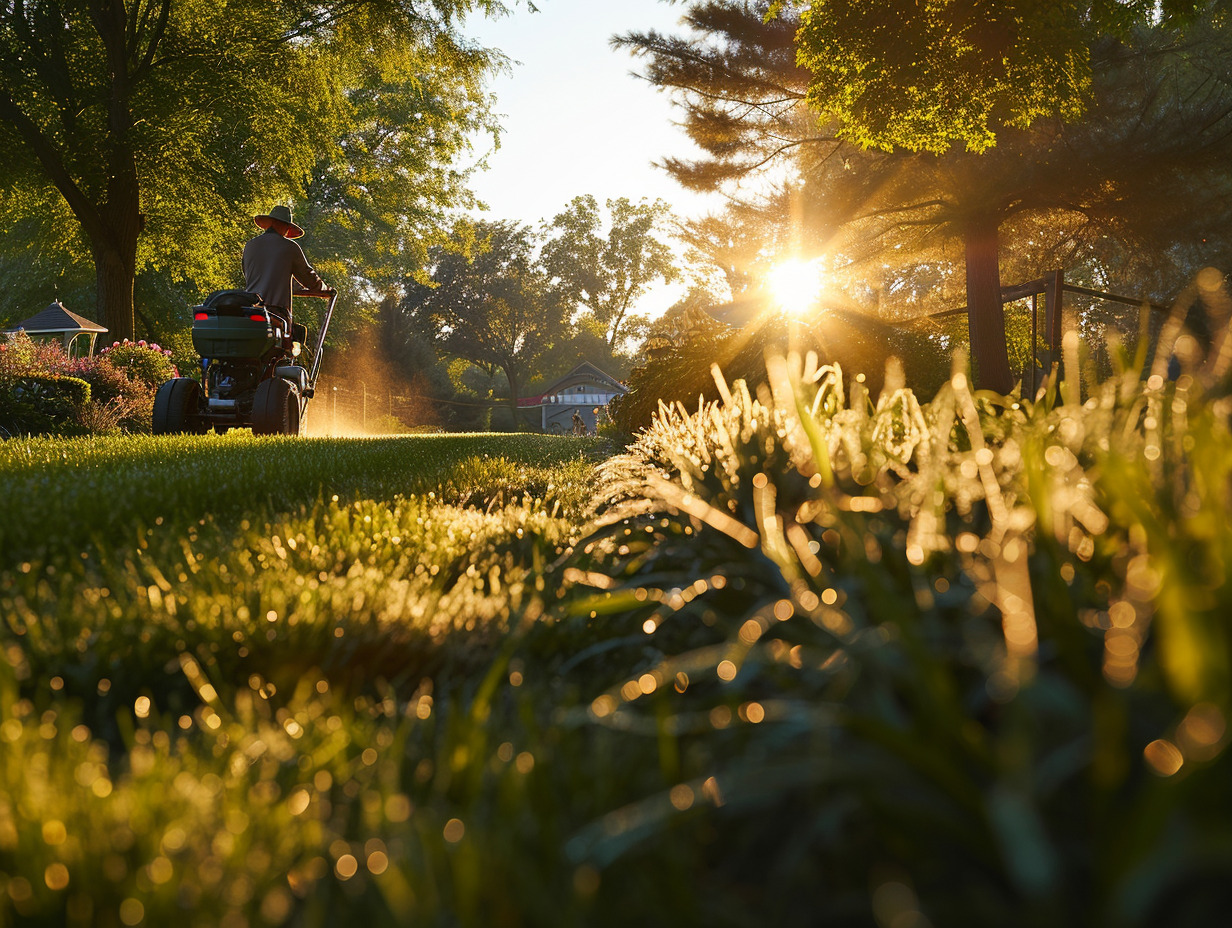
A special mention should be made regarding the mechanical maintenance of the lawn. Gas mowers: expert choice should be favored for their efficiency and precision, provided they are used correctly. Mowing at an adequate height, generally between 7 and 10 centimeters, helps prevent the weakening of the grass and the risk of yellowing. Follow these proven cultural practices to ensure a resilient and vigorous lawn.
Strategies and Techniques for a Lush Lawn
Watering, a crucial element for the health of your lawn, should be done gradually and deeply. This technique allows the roots to absorb water more effectively and helps to green up the lawn. Avoid shallow watering that encourages the development of shallow roots, making the lawn more vulnerable during dry periods.
Mowing is another fundamental cultural practice. A cutting height between 7 and 10 cm is ideal to avoid weakening the grass. Collecting clippings is essential to prevent root suffocation and the proliferation of diseases. The lawn, thus freed, breathes better and maintains a vibrant green color.
Using specific fertilizers for the lawn in spring provides the necessary nutrients to strengthen the lawn and promote rapid greening. Be cautious of excess nitrogen, which could worsen yellowing. Therefore, maintaining a balance in fertilizer application is crucial for the health of the lawn.
To combat fungi and other pests, diluted baking soda in water proves to be an effective remedy. Similarly, planting clover within the lawn can improve its drought resistance and enrich the soil with nitrogen, contributing to a more robust and resilient lawn. Regularly eliminate weeds and moss to allow your lawn to enjoy maximum exposure to light and oxygen.