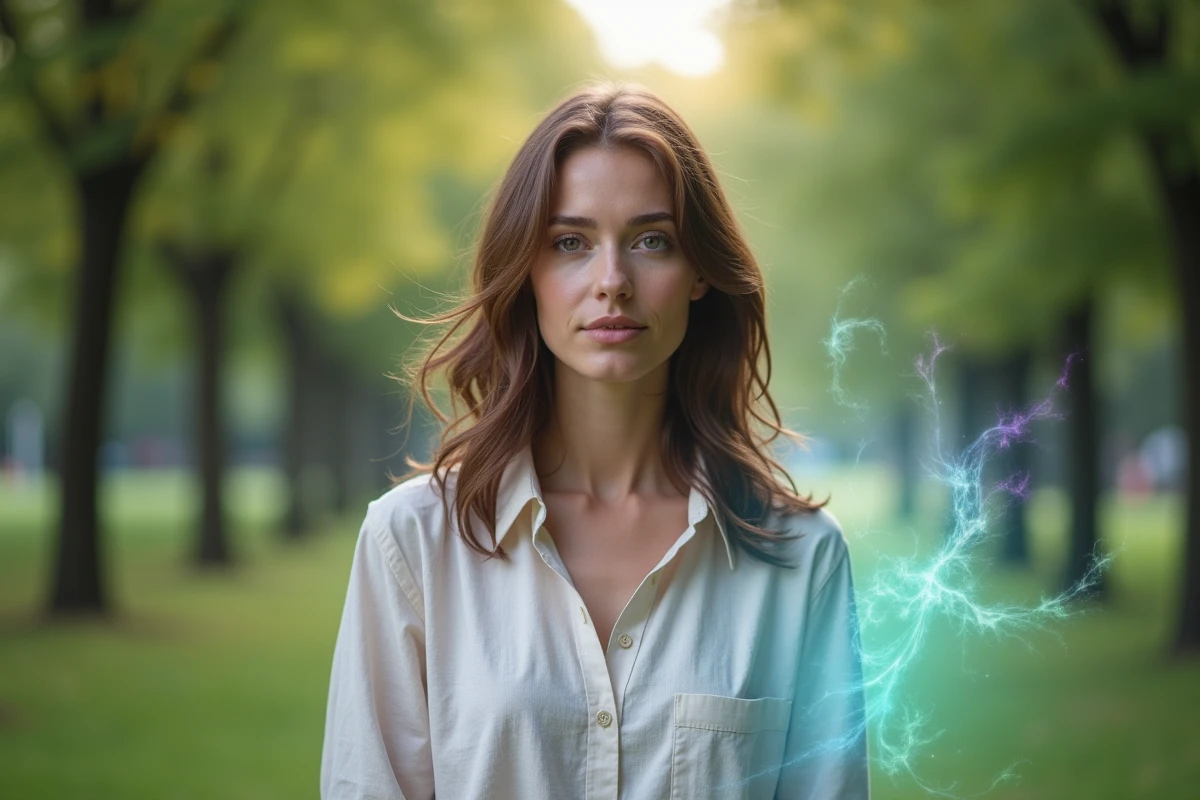
Each color observed in the energy field corresponds to distinct emotional or physiological states, sometimes contradicting common beliefs about the stability of the aura. Researchers in bioelectrography have already shown that the perception of this energy varies according to the environment and health status. Yet, some traditions attribute specific virtues or risks to the shades of the aura, without scientific consensus.
The interpretation relies on methods that differ greatly from one culture to another, and the diversity of approaches makes observation complex. The practices to perceive or feel these phenomena are based on simple exercises, accessible without prior training.
The Aura: What It Really Is and Why It Intrigues So Much
The aura is no longer just part of folklore or the clichéd images of well-being. This energy field, imperceptible to some, is obvious to others, and continues to fuel debates and curiosities. Between the search for meaning, spiritual heritage, and nascent scientific approaches, we tread a fine line. To be interested in it is to accept the unknown and prefer nuance over certainty.
Practitioners describe a set of layers, from the etheric body to the causal: each would harbor a key aspect of the person, including vital force, emotion, mind, and spiritual dimension. Nothing is static: transient stress, crises of confidence, restorative sleep, or unexpected happiness all leave an imprint on the subtle envelope, according to those who observe the traces. A simple exchange or a heavy atmosphere would then tint or lighten this invisible field.
For some, reading an aura becomes almost a profession: mediums, therapists, or aura photography enthusiasts compete in techniques to interpret the slightest nuances. But fixing the palette would be illusory. The aura evolves, modulates, becomes troubled or brightens with the hours, inner states, and external influences. Rather than a fixed code, it is a dynamic to decipher, and it is quite clever to claim one can summarize it all in a simple diagram. To gather testimonies, cross-analyze, or just learn differently, the site https://www.aurablog.org/ offers an approach that refuses ready-made shortcuts.
Behind the quest for the aura, we also touch on another question: how to reconcile what is felt and what is proven? The energy field then becomes a terrain for exploration. It invites us to refine our perceptions, listen to our intuitions, and take a step aside from usual frameworks. Another way to think about the link between personal balance, inner health, and global energy.
Aura Colors: How to Recognize Them and What They Mean
It is difficult to reduce the aura to a single color. Most often, a subtle mix of shades overlaps and tells what words sometimes leave unsaid. State of mind, health, life context—these are what influence the variations displayed. Certain hues regularly appear in testimonies, each tradition attributing unique meanings to them, often resonating with chakras and character traits.
To discern what the colors say, here are those most frequently reported by observers, along with the usual interpretations associated:
- Red: a symbol of physical energy, vital impulse, sometimes of buried anger; this tone is naturally associated with the root chakra.
- Orange: evokes creativity, openness, a desire for movement; it relates to the sacral chakra and conveys lightness of being and openness to others.
- Yellow: a sign of optimism, mental clarity, an air of confidence, often linked to the solar plexus.
- Green: a shade of calm, tenderness, and the ability to care; its natural link with the heart chakra is highlighted.
- Blue: inner tranquility, ease in communication, emphasis on listening; this color radiates from the throat chakra.
- Indigo: describes developed intuition, clear vision, and perception of hidden things, associated with the third eye.
- Purple: aspiration for elevation, quest for meaning or inspiration, related to the crown chakra.
Other colors may also manifest: a pink signifies softness and empathy, a magenta conveys originality, a white or gold reflects a feeling of purity or particular consciousness experiences. Conversely, a gray or black may signal burnout, prolonged fatigue, or even emotional blockages.
Deciphering the colors of an aura is not about judgment, but about learning to read between the lines of humanity, where words are no longer quite sufficient. It is also an opportunity to dialogue between tradition, psychology, and lived experience.
Want to See or Feel Your Aura? Simple Methods and Tips to Get Started
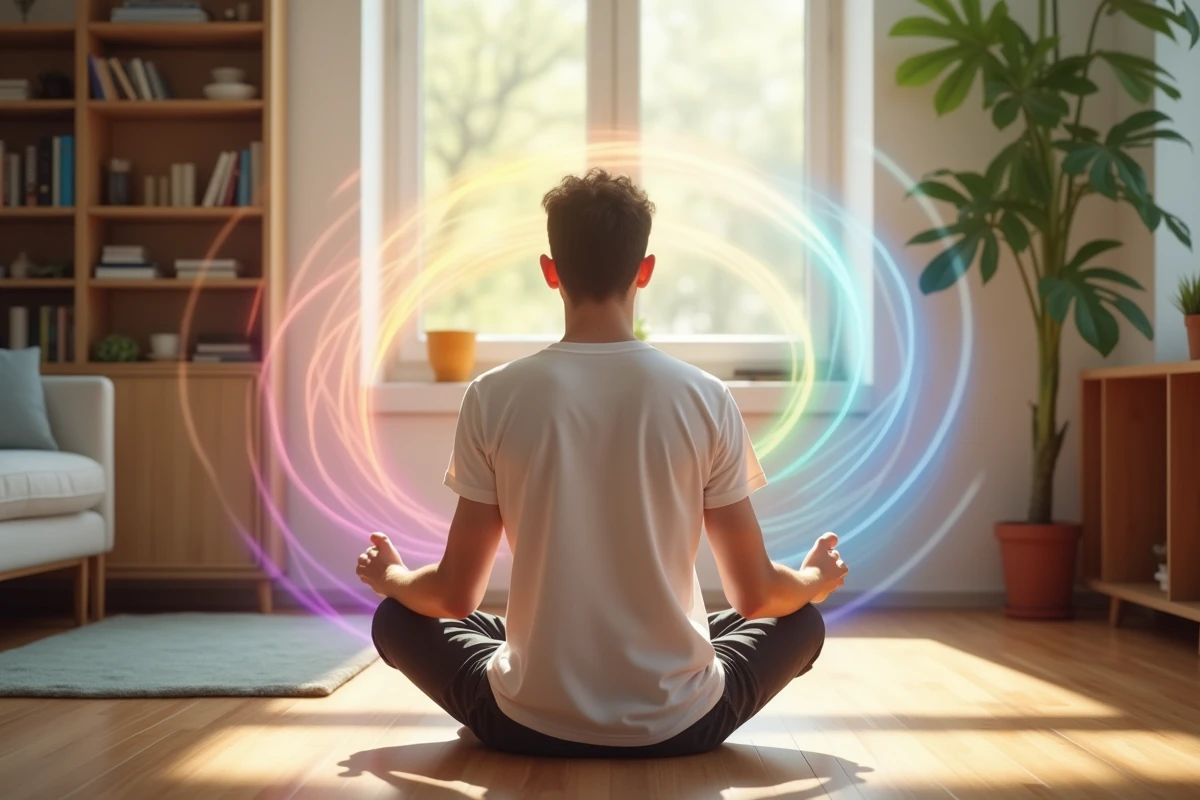
Trying to perceive the aura requires neither exceptional gifts nor rare materials. Just a bit of diligence and self-attention. Sit calmly in front of a light wall, hands forward, fingers apart: focus on the space between your fingers without straining, let your gaze become blurry. Sometimes, after a few moments, a luminous shape begins to take form: this is often where contact is made, even discreetly. Natural light helps; patience does too.
Others prioritize sensation over visuals. Close your eyes, focus your attention around your body. You may feel a light coolness or some tingling along your skin: everyone has their own mode of perception of the energy field. Regular meditation facilitates these sensations: breathe calmly, visualize a glow surrounding you. Some use a pendulum or protective stones, such as labradorite or tiger’s eye, to strengthen their space or “cleanse” energetic tensions.
If your goal is to restore a peaceful energy field, a few daily gestures are enough to establish better harmony. Here are habits that many experiment with:
- Burn a bit of white sage to purify a room or living space.
- Place Epsom salt in the corners of frequented spaces to absorb heavy influences.
- Walk barefoot on the earth or grass, simply to feel natural grounding and rejuvenate.
No miracle method, rather a path of self-listening and adjustment at one’s own pace. Those who wish to delve deeper will find enriching references in the exchange of practices and viewpoints. Exploring the aura is to offer oneself the chance for an intimate discovery, where the living reveals itself differently than in the mirror’s reflection. And what if, tomorrow, your image bore the trace of renewed energy?