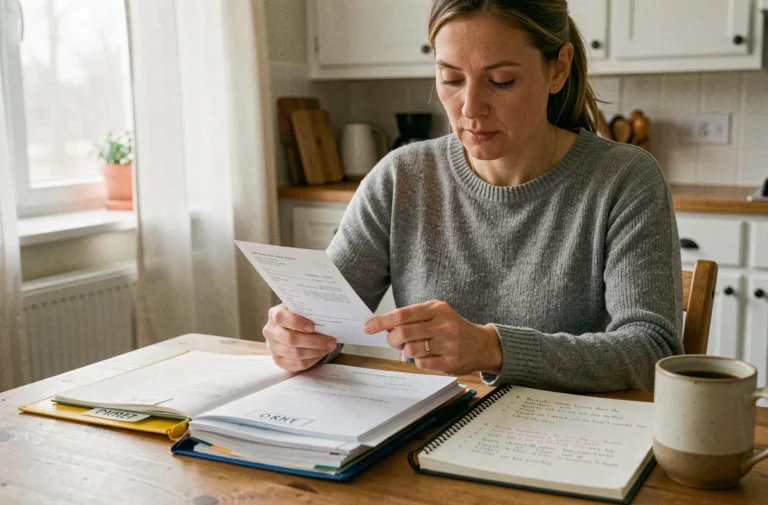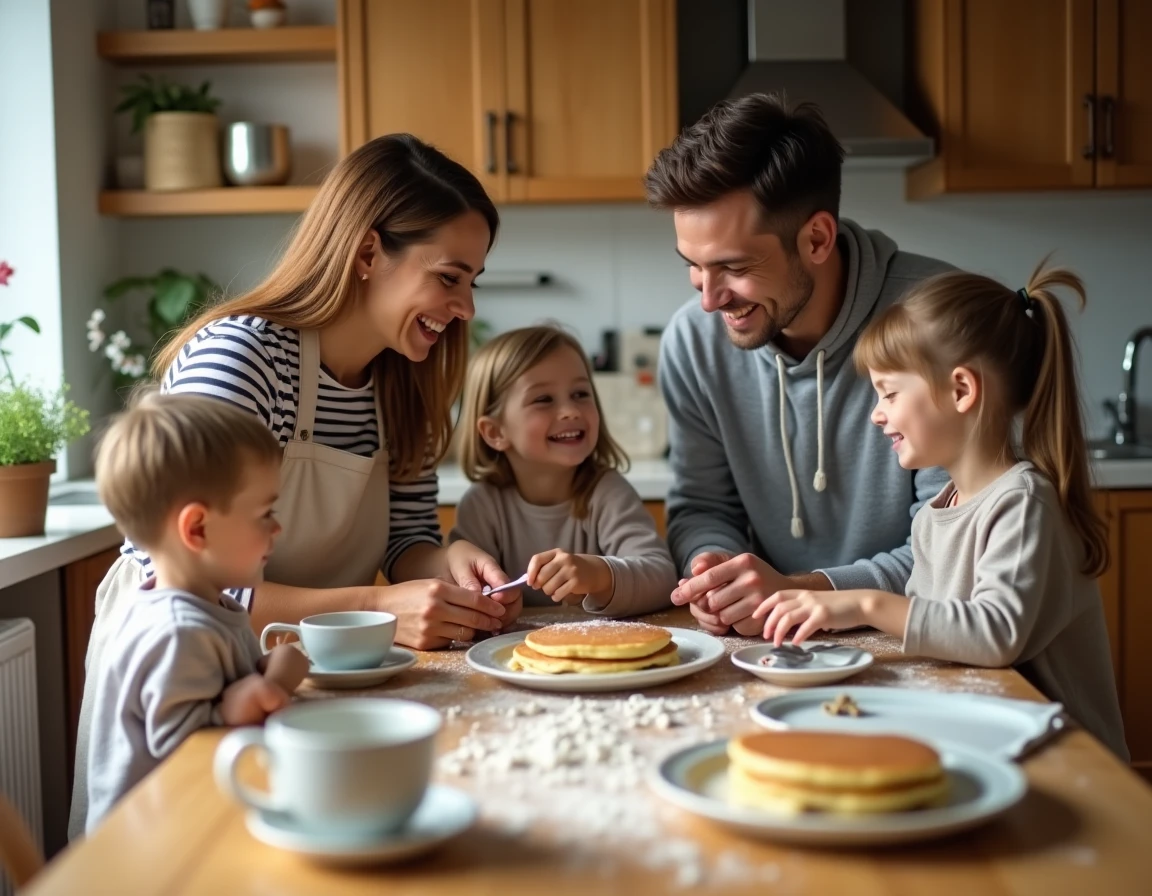
A thriving family life relies on concrete adjustments related to the actual habits of the household. Since the post-Covid period, domestic habits have shifted: more frequent shared meals, increased screen time, and parental mental load recognized as a source of tension by public health institutions. These changes alter the way parents and children coexist daily, and generic advice on communication or organization is no longer sufficient to cover the topic.
Parental mental load: a documented source of tension
The parental mental load is not just an accumulation of tasks. It refers to the ongoing responsibility of thinking about everything: medical appointments, seasonal clothing, food supplies, school reminders. This invisible management disproportionately weighs on one parent, most often the mother.
Dividing tasks is not enough if the responsibility for planning remains concentrated on the same person. A parent who executes tasks when asked does not lighten the load. It adds a layer of delegation to the one already managing planning and follow-up.
On the family section of 1 maman blogueuse, you can find concrete feedback from parents facing this distribution, with adjustments tested in various family configurations (couple, single parent, blended family).
Three guidelines for redistributing the mental load
- Write down all the invisible tasks (medical follow-up, stock management, school reminders) for a full week to make measurable what is not spontaneously evident
- Assign entire domains to each parent rather than isolated tasks: the person responsible for a domain manages planning, execution, and follow-up without soliciting the other
- Reassess the distribution each month, because professional constraints and children’s needs change, and a fixed balance will always end up becoming unbalanced
Screens and family climate: what recent European reports describe

Since 2022, several European reports have noted a significant increase in screen use to calm children, across all age groups, including toddlers. The Defender of Rights highlights this overexposure as a public health and parenting issue.
The documented consequences go beyond screen time itself. Negotiations over duration, disputes at cutting-off time, effects on sleep and homework: these repeated conflicts degrade the household climate over the weeks.
Setting a rule is one thing. Maintaining it in the face of parental fatigue, peer pressure, and the fact that screens remain the quickest way to achieve calm in a tense household is another.
Concrete suggestions beyond time limitations
Some parents identify specific times when screens serve as a pressure valve (after school, meal preparation) and seek targeted alternatives. Replacing a screen with an accessible, no-preparation-required activity (free drawing, audio listening, already set up construction play) is more sustainable than replacing a screen with nothing.
What works in a household with a single child does not apply to a sibling group of three. The needs for autonomy and stimulation differ radically from one age to another.
Family meal rituals: a lasting post-Covid trend
Recent data shows a sustained increase in family time spent around meals since Covid. A majority of parents express a desire to maintain these table rituals. Shared meals remain one of the few moments when all household members are physically present, without competing activities.
This does not mean turning every dinner into a solemn occasion. A meal taken together, even if quick and imperfect, creates a regular space for conversation. Children who participate in preparation or menu selection develop a sense of belonging to the household’s functioning.
Useful ritual or additional constraint
A family ritual works when it does not rely on the will of just one parent. If the evening meal becomes a source of logistical stress for the one who cooks, prepares, serves, and cleans up, the ritual adds to the mental load instead of strengthening the bond.
Regularity matters more than ambition. A simple meal shared four evenings a week is better than an elaborate dinner that exhausts the responsible parent.
Blended and single-parent families: specific adjustments
The logistics of shared custody, the role of the stepparent, the management of different rules between two households: these situations require responses that have nothing to do with recommendations designed for a stable couple under the same roof.
A solo parent managing daily life alone needs solutions compatible with a tight schedule. Blended families face relational challenges that mere “positive communication” does not resolve, especially when children navigate between contradictory educational codes.
The available data does not show that one family model produces better outcomes than another in terms of flourishing. Adapting advice to the actual structure of the household remains crucial. A universal piece of advice applied without considering the family configuration risks generating guilt rather than well-being.
Shared meals, redistribution of the mental load, clear management of screens, and consideration of actual family structures form a more effective foundation than any list of good resolutions. Each household deals with its own constraints, and it is in this ongoing adjustment that a sustainable daily life is built.